Solar power in India isn't a future promise anymore. It's happening right now, on rooftops, on barren land, and across industrial belts where sunlight used to just go to waste. As demand for solar installation services in India continues to grow, here's what most people don't see: the sleek rows of panels you drive past took months of groundwork, planning, and precision before a single unit of power ever reached the grid.
Building a solar plant is less like flipping a switch and more like conducting an orchestra. Every phase, from soil testing to final commissioning, has to land at the right moment. Miss one beat and the whole project stalls.
This piece walks through what actually happens between "we've decided to go solar" and "we're now generating clean power," and why the details in between matter more than people assume.
What Does Building a Solar Plant Actually Involve?
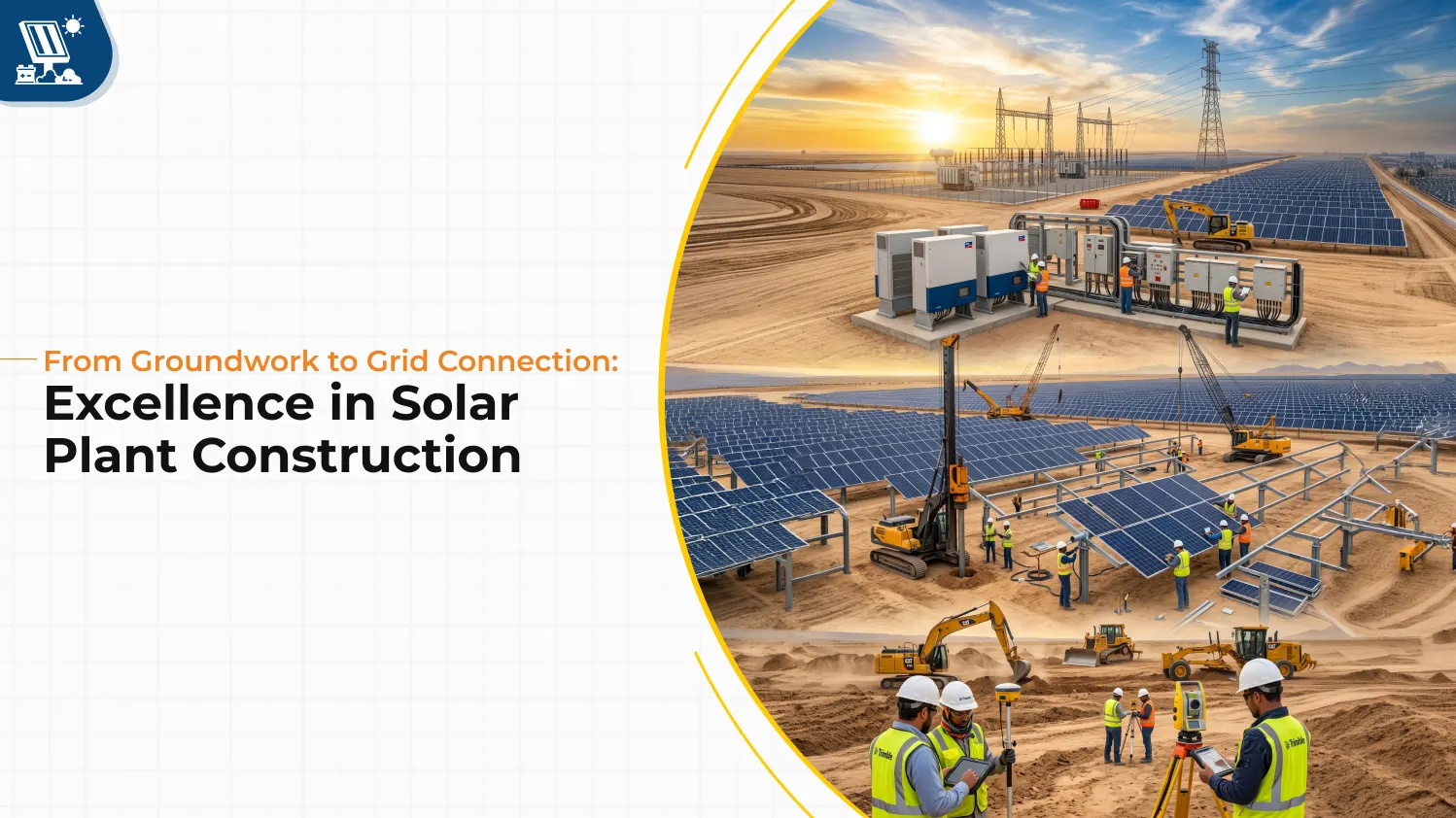
At its core, a solar plant is a system of components working in sync: panels, inverters, mounting structures, cabling, and grid infrastructure. Getting all of it to function as one unit is what solar plant construction services are really about. It's not just laying down panels and calling it a day.
A typical project moves through six broad stages:
Site assessment and groundwork
Engineering and design
Procurement of components
Civil and mechanical installation
Electrical integration
Testing, commissioning, and grid connection
Each one feeds into the next. Skip a step, or rush it, and you'll pay for it later in underperformance or downtime.
Phase 1: Site Assessment and Groundwork
Before anything gets built, the land itself has to earn its keep. Soil composition, water table depth, shading patterns, and even the direction of prevailing winds all factor into whether a site works for a large-scale installation.
A capable solar construction company will typically run through:
Topographic surveys to map elevation changes
Soil testing to determine foundation type
Shadow analysis using drone or satellite imagery
Access road planning for heavy equipment
Drainage assessment to prevent water pooling under panels
This groundwork phase can take anywhere from two to six weeks, depending on site size. Rushing it is one of the most common reasons projects run into structural issues years down the line.
Phase 2: Engineering, Design and Permitting
Once the land is understood, engineers translate that data into a working design. This includes panel layout, tilt angles, string sizing, and the electrical single-line diagram that governs how power flows from panel to grid, forming the foundation for efficient solar plant construction services.
Permitting runs parallel to design work. Depending on the state, this can mean coordination with the electricity board, environmental clearances, and land-use approvals. In Gujarat, for instance, projects often need sign-off from the state electricity regulatory commission before construction can proceed past groundwork.
Design isn't a one-and-done task either. Engineers usually revisit layouts two or three times as procurement data comes in, adjusting for whatever equipment actually becomes available.
Phase 3: Procurement Choosing the Right Components
This is where the budget meets reality. The panels, inverters, and mounting hardware chosen here will determine performance for the next 20 to 25 years, so cutting corners isn't really an option.
Component | Key Consideration | Typical Lifespan |
|---|---|---|
Solar panels (mono/poly) | Efficiency rating, temperature coefficient | 25+ years |
String/central inverters | Conversion efficiency, warranty terms | 10-15 years |
Mounting structures | Wind load rating, corrosion resistance | 25+ years |
Cabling & connectors | Insulation rating, UV resistance | 20-25 years |
Transformers | Capacity matching, cooling method | 20+ years |
Component sourcing also affects timelines. Import delays, especially for inverters and specialized glass, have delayed more than a few projects over the past two years.
Phase 4: Civil and Mechanical Installation
With materials on-site, the physical build begins. Foundations get poured or driven (depending on soil type), mounting structures go up, and panels get racked into place.
A reliable solar plant installation company sequences this work carefully. Foundation curing must be complete before structural loads are applied, and racking must be level before panels are mounted, or you risk uneven stress on the frames.
Weather plays a bigger role here than people expect. Monsoon delays, high wind days, and extreme heat all shift installation schedules, sometimes by weeks.
Phase 5: Electrical Wiring and System Integration
This is the nervous system of the plant. DC cabling connects panels into strings, which feed into combiner boxes, then inverters, which convert DC to AC before stepping up to the grid voltage through transformers.
Wiring mistakes here are quiet but costly. A poorly torqued connector or mismatched cable gauge won't fail immediately; it'll just underperform for years until someone finally traces the loss back to its source.
Phase 6: Testing, Commissioning and Grid Connection
Before a plant goes live, it has to pass a battery of checks: insulation resistance testing, earthing verification, inverter communication checks, and a full functional run under load.
Grid connection itself involves coordination with the local discom (distribution company), synchronization testing, and often a probationary period where output is monitored closely. A Solar System Installation Company handles this final stretch, since a small mismatch in phase synchronization can trip protection relays and delay commissioning by days.
Once synchronized, the plant is handed over with performance guarantees, warranty documentation, and a monitoring dashboard for ongoing tracking.
Why Kutch Is Becoming a Solar Hotspot
Kutch, in western Gujarat, gets some of the highest solar irradiance figures in the country, largely thanks to its arid terrain and minimal cloud cover for most of the year.
According to the Ministry of New and Renewable Energy, Gujarat's installed solar capacity crossed 20 GW by early 2026, with Kutch contributing a substantial share of utility-scale projects. According to the National Institute of Solar Energy, parts of Kutch receive average daily solar radiation above 5.5 kWh/m², among the highest in India.
Metric | Kutch Region (2026) |
|---|---|
Average daily solar radiation | 5.5–6.0 kWh/m² |
Land availability (barren/wasteland) | High |
Annual sunny days | 300+ |
Grid infrastructure investment | Expanding rapidly |
This combination of land, sunlight, and improving infrastructure is exactly why solar installation services in Kutch have grown so quickly over the past few years. Developers are drawn here not just for the resource, but for the room to build at scale without competing for space.
Common Challenges During Construction
No project runs without friction. Some recurring issues worth planning around:
Land title disputes: Especially on wasteland parcels with unclear ownership history
Monsoon timing: Civil work often needs to pause for weeks during peak rain
Equipment import delays: Inverters and specialized glass are frequent bottlenecks
Grid capacity constraints: Some substations need upgrades before they can absorb new capacity
Skilled labor shortages: Experienced electrical technicians are in short supply in rural belts
A solar construction company that's handled multiple regional projects usually has contingency plans baked into the schedule for at least a few of these.
In-House Teams vs Third-Party EPC Partners
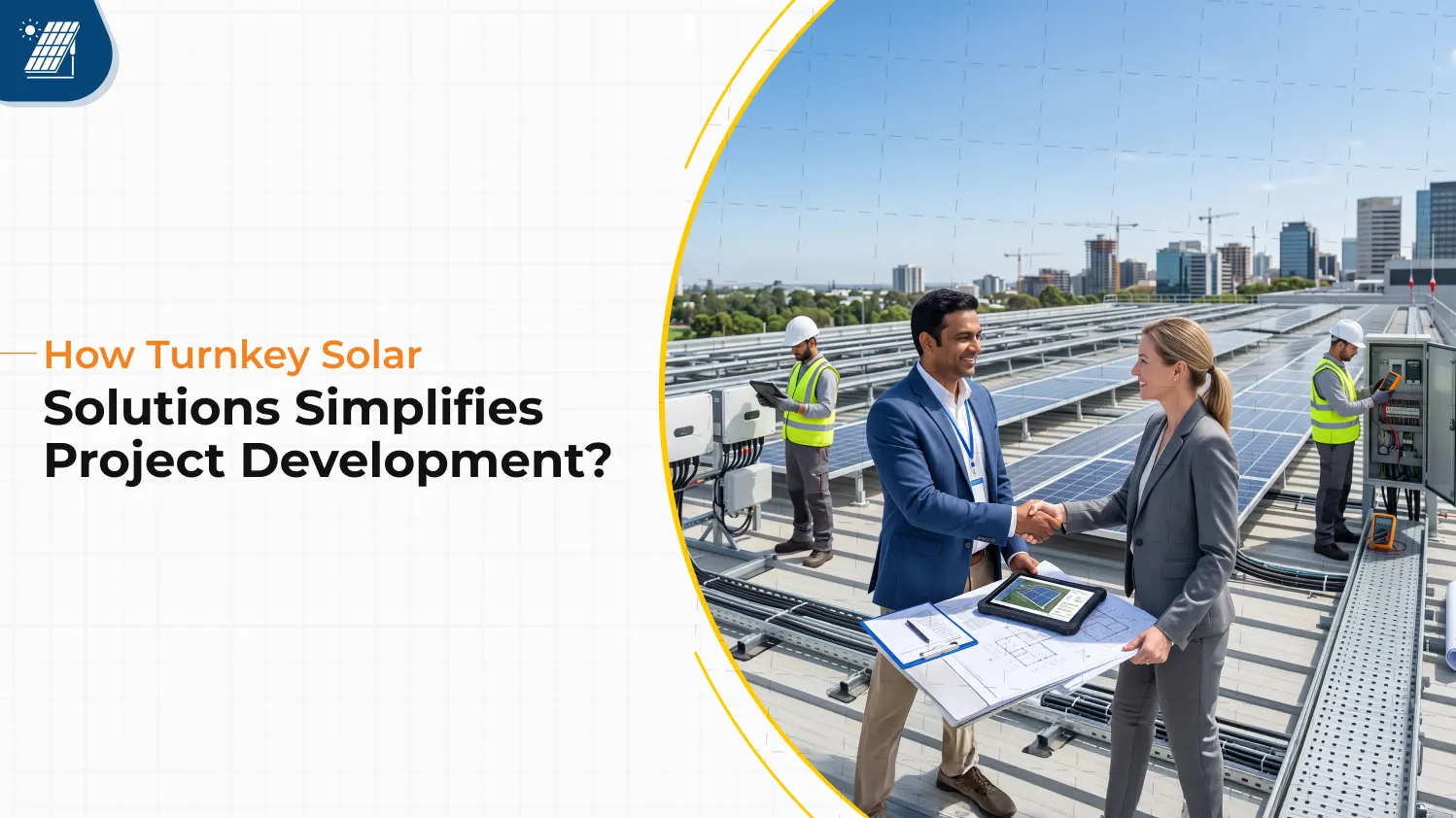
Businesses building their first solar asset often ask whether to hire an in-house team or contract an EPC (Engineering, Procurement, Construction) partner.
Factor | In-House Team | EPC Partner |
|---|---|---|
Upfront cost | Lower (no markup) | Higher (includes margin) |
Speed to completion | Slower, learning curve | Faster, established process |
Risk of design errors | Higher for the first project | Lower, experience-based |
Ongoing support | Depends on internal capacity | Often bundled in |
Best suited for | Repeat, large-scale developers | First-time or mid-size projects |
For most businesses building their first plant, solar plant construction services from an established partner reduce the learning-curve risk considerably, even if the upfront quote looks higher on paper.
Post-Commissioning: Operations and Maintenance
The work doesn't stop once the plant is live. Panels need periodic cleaning (dust accumulation alone can cut output by 5 to 8%), inverters need firmware checks, and cabling connections loosen over time with thermal cycling.
A dependable solar plant installation company usually offers an O&M contract covering these checks on a quarterly or biannual basis, along with remote performance monitoring so drops in output get flagged before they become bigger problems.
Choosing the Right Partner for Your Project
Not every contractor handles every phase equally well. Some are strong on civil work but weak on electrical integration. Others excel at design but subcontract installation to whoever's available that month.
When evaluating a Solar System Installation Company, a few questions are worth asking directly:
How many plants of similar scale have they commissioned?
Do they handle procurement, or just labor?
What's their track record with grid synchronization delays?
Is post-commissioning support included, or billed separately?
Conclusion
Getting from bare land to a grid-connected, revenue-generating solar plant takes more coordination than most people expect. Groundwork, design, procurement, installation, and commissioning all have to line up, and skipping any one of them tends to show up as a problem later rather than sooner.
For businesses in Kutch weighing their options, White Desert has been part of that journey for developers looking to build reliably, from the first soil test to the day the plant syncs with the grid.