A solar plant fails or succeeds long before installation begins. Poor cabling, wrong inverter sizing, or a mismatched layout can quietly cut years of output and add repair costs nobody planned for. Getting the drawings right from day one is what keeps a solar project profitable, safe, and easy to maintain for the next 25 years.
Solar looks simple from the outside: panels, an inverter, some wires, done. In reality, every megawatt of solar capacity rests on hundreds of small engineering decisions. Get them right, and the plant runs quietly for decades. Get them wrong, and owners spend years chasing losses they can't explain.
This is exactly why proper planning and design work matter more than most people expect before construction even starts, making experienced solar electrical design services in India a valuable part of successful project execution.
What Do Solar Electrical Design Services Actually Involve?
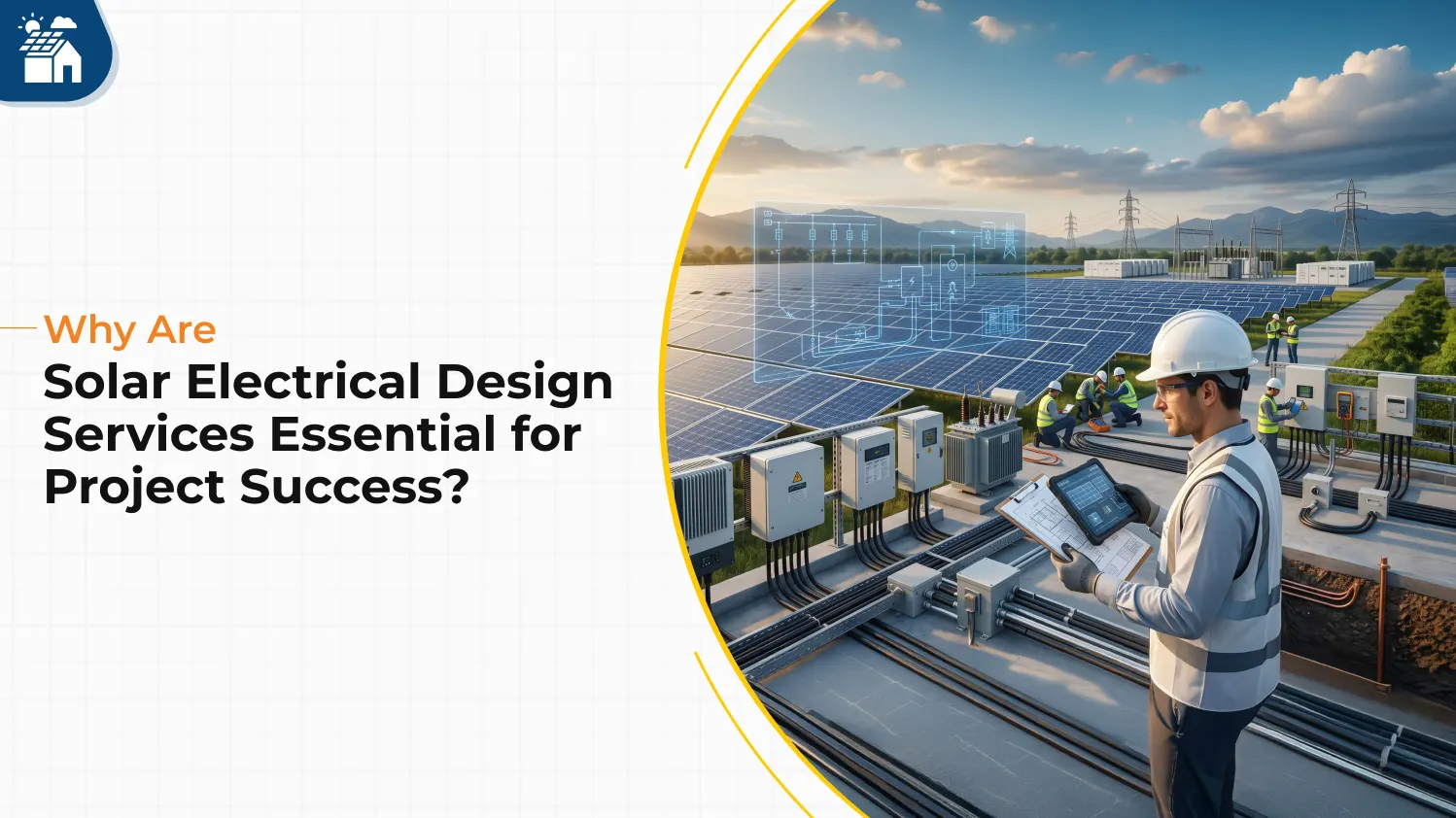
A solar plant is only as reliable as the drawing it was built from. Before a single panel goes up, a project needs load calculations, cable sizing, protection schemes, and layout drawings matched to real site conditions, not a generic template copied from another state.
For a project team working across the salt flats and industrial belts of this region, choosing solar electrical design services in Kutch means getting drawings that account for local grid codes, high ambient temperatures, and soil behaviour specific to the area. Designs made without local context often skip these details, which is exactly why solar project electrical engineering in Kutch matters more than it might seem at first glance.
This scope of work typically covers:
Single line diagrams (SLD)
Cable sizing and voltage drop calculations
Earthing and lightning protection layouts
Inverter and combiner box placement
Structural load mapping for mounting systems
Protection coordination between panels, inverters, and the grid
Statistics: Why Design Quality Determines Solar Project Outcomes
Numbers tell the story better than opinions do. According to the International Energy Agency's renewable energy tracking, solar remained the fastest-growing source of new electricity generation capacity worldwide through 2025, which means design mistakes made at this scale now carry a much higher financial cost than they did a decade ago.
According to IRENA's cost and performance reporting, badly routed cabling and undersized conductors are among the most common causes of long-term generation losses on utility and commercial solar sites.
Design Factor | Typical Impact When Done Poorly | Why It Matters |
Cable sizing | Voltage drop above safe limits | Cuts usable output over the plant's life |
Earthing layout | Higher fault and lightning risk | Raises safety incidents and downtime |
Inverter placement | Heat stress, early component failure | Shortens equipment lifespan |
Layout planning | Shading losses between rows | Reduces annual energy yield |
Protection coordination | Slow fault isolation | Increases repair time and cost |
The pattern across these sources is consistent: most underperformance complaints trace back to decisions made on paper, not on site.
Solar Plant Design and Engineering: Getting the Foundations Right
Every solar plant sits on top of decisions made long before construction begins. Design and engineering of a solar plant covers the structural, electrical, and civil groundwork that decides whether a plant holds up through 25 years of heat, wind, and monsoon load, or starts developing problems within the first few seasons.
Good solar plant design and engineering work accounts for foundation depth, wind-load ratings on mounting structures, and drainage planning around the site details that rarely show up in a rushed proposal but matter enormously once construction is underway.
Core Elements of Solar PV System Design
Good solar PV system design is not one drawing; it's a stack of interlinked calculations that all have to agree with each other. If one layer is wrong, the rest of the plan inherits the mistake.
A complete solar project design usually includes:
Site assessment: Shading study, soil report, and available roof or ground area
Electrical load study: Matching generation capacity to actual consumption patterns
String and array configuration: Deciding how panels connect for maximum yield
Grid interconnection study: Checking transformer capacity and utility requirements
Safety and compliance mapping: Arc-fault protection, rapid shutdown, and fire codes
Skipping any one of these steps at the solar system design stage tends to surface as a problem months after the plant is already running, when fixing it costs far more than getting it right the first time.
How Solar System Design Services Reduce Field Failures
Field crews can only build what the drawing tells them to build. When solar system planning is rushed or outsourced to someone unfamiliar with the site, installers end up making judgment calls in the field, and those calls are rarely documented, which makes future maintenance harder. Reliable solar system design services catch problems before construction begins, including:
Conflicts between structural drawings and electrical layouts
Cable runs that exceed manufacturer voltage-drop limits
Missing clearances required by local fire and safety codes
Equipment specified for the wrong climate zone
Projects that invest properly in solar design work at the front end consistently report fewer change orders during construction, which keeps both budget and timeline closer to the original plan.
Solar Engineering Services: In-House vs Outsourced
Many developers ask whether engineering for solar projects should sit in-house or be handed to a specialist firm. There's no single right answer, but the comparison below shows why most mid-size and large developers choose outsourced solar engineering services for anything beyond a rooftop residential job.
Factor | In-House Team | Outsourced Solar Engineering Services |
Upfront cost | Higher (salaries, software licenses) | Lower, project-based pricing |
Access to specialists | Limited to hired staff | A wide range of expertise on demand |
Speed for large projects | Slower without dedicated capacity | Faster with a team already in place |
Familiarity with local codes | Depends on hiring | Firms working across regions bring this knowledge |
Best suited for | Companies building solar constantly | One-off or occasional projects |
For a company doing one or two solar builds a year, keeping a full engineering department on payroll rarely pays for itself. Bringing in solar project engineering support on a project basis usually works out cheaper and faster.
Why Kutch's Terrain and Climate Change the Design Equation
Kutch is not an easy region to design for. Summer ground temperatures regularly push module temperatures past standard test conditions, cutting output if the system wasn't planned with that heat in mind. Soil across parts of the region includes saline and shifting ground, which changes how foundations and earthing systems are built.
Add seasonal dust storms and a coastal humidity swing, and it's clear why copying a design built for Rajasthan or Maharashtra rarely works without changes. This is one reason solar electrical design services in Kutch require a strong understanding of local conditions. Wind-loading data, soil resistivity testing, and dust-accumulation patterns all need to feed into the drawings before construction starts, not after panels are already installed and underperforming.
Step-by-Step: What a Professional Design Process Looks Like
A properly run design phase generally follows this sequence:
Site survey: Physical inspection, soil testing, shading analysis
Load and generation study: Matching output to actual demand
Preliminary layout: Panel rows, access paths, equipment zones
Electrical calculations: Cable sizing, protection devices, grounding
Compliance review: Checking against fire, safety, and utility codes
Drawing package release: SLDs, layout plans, and specification sheets
Construction support: Answering field questions as installation proceeds
Missing or shortening any of these steps tends to show up later as an unplanned expense, usually at the worst possible time in the project schedule.
Common Design Mistakes That Cost Money Later
Some mistakes show up again and again across solar projects:
Undersized cabling to save on upfront material cost, leading to long-term voltage-drop losses
Poor row spacing that causes shading losses nobody notices until the first hot season
Ignoring future expansion so that adding capacity later means redoing existing wiring
Skipping soil testing, which shows up as foundation problems within a few years
Copy-pasted drawings from a different climate zone or state
Each of these is preventable with proper planning at the design stage, before construction locks in the mistake.
Conclusion
A solar plant's long-term performance is decided on paper before it's ever built in the field. Cable sizing, layout planning, protection coordination, and site-specific engineering are not optional extras; they are the difference between a plant that runs quietly for 25 years and one that needs constant troubleshooting.
At White Desert, project teams working across Kutch and beyond rely on this kind of upfront planning and solar plant design and engineering to avoid the costly surprises that come from rushed or generic design work. Getting the engineering right the first time remains the simplest way to protect a solar investment for the long run.