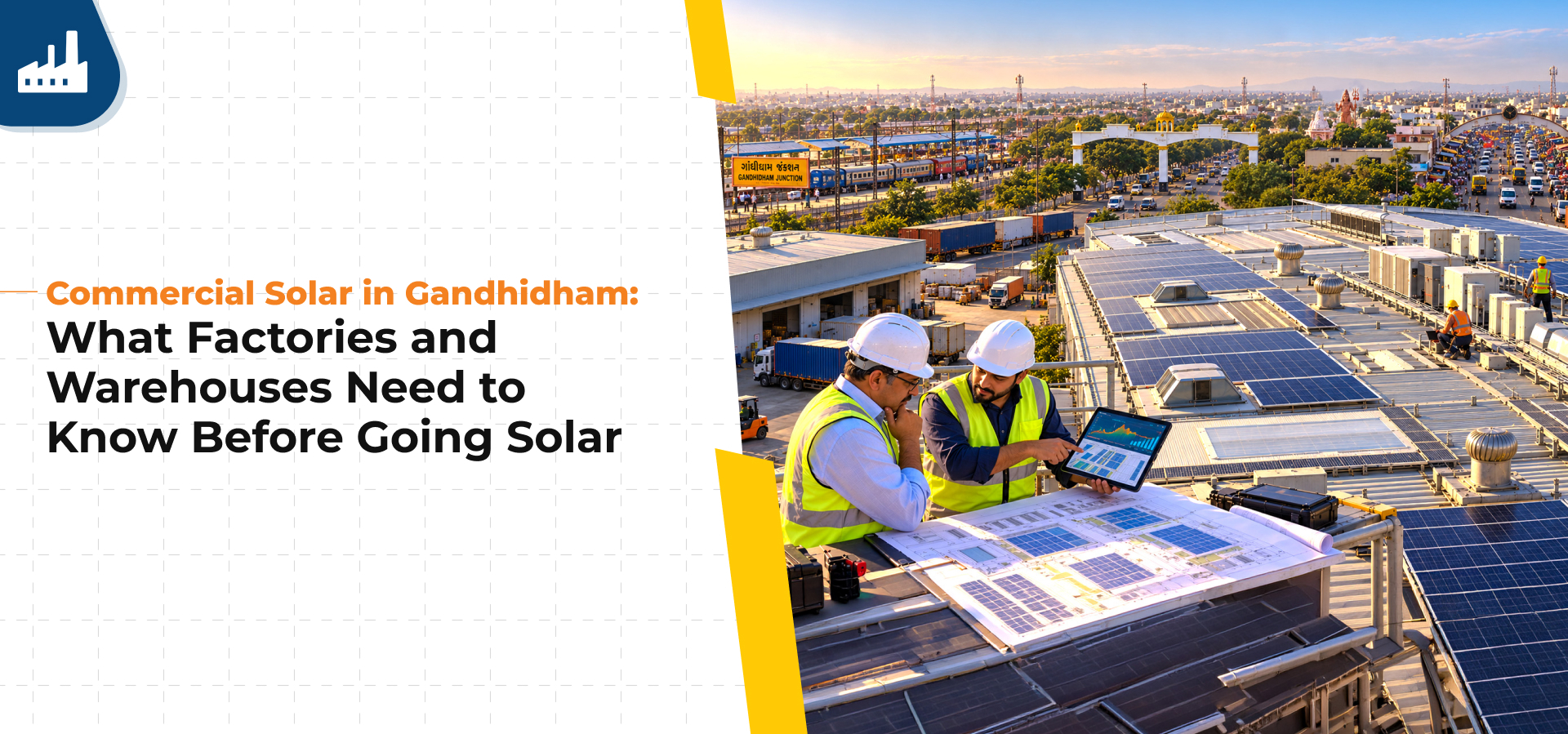
Gandhidham runs on industry. Between the port-adjacent logistics hubs, the warehousing belt, and a manufacturing base that spans everything from textiles to engineering goods, the city's businesses collectively consume enormous amounts of electricity every single day. For a growing number of factory owners and warehouse operators here, the question isn't whether solar makes financial sense anymore, it's which provider will actually deliver a system sized correctly for their operation and built to survive Kutch's demanding climate for the next 25 years.
This guide is written specifically for that audience: the factory manager evaluating a rooftop array across a manufacturing shed, the warehouse owner weighing a captive power plant against rising grid tariffs, and anyone trying to separate a genuinely capable solar company in Gandhidham from one that's simply good at sales.
Why Gandhidham's Industrial Base Makes Solar a Different Calculation
Residential solar decisions revolve around monthly electricity bills and a household's rough daily usage pattern. Industrial and commercial solar decisions in a city like Gandhidham work differently, because factory and warehouse loads are larger, more variable across operating hours, and directly tied to production output and shipping schedules. A system that isn't properly sized against actual facility consumption data doesn't just underperform, it represents a meaningful miscalculation of capital for a business operating on tight margins.
This is also a city where electricity costs are a real line item affecting competitiveness, not a background expense. Businesses operating cold storage, manufacturing equipment, or continuous logistics operations feel the impact of grid tariff increases more acutely than most residential consumers do, which is exactly why commercial solar in Gandhidham has become less of an environmental talking point and more of a straightforward operating cost decision.
What Factories Need to Evaluate Before Committing
Actual Load Profile, Not Estimated Consumption
The single biggest mistake industrial buyers make is sizing a system against a rough annual electricity bill average rather than detailed hourly or shift-pattern consumption data. A factory running three shifts has a dramatically different load curve than one operating a single daytime shift, and a solar system designed without this distinction in mind either undersizes the opportunity or oversizes the investment relative to what the facility can actually use.
Roof Structural Capacity
Many industrial sheds in Gandhidham were built with specific load tolerances that weren't necessarily designed with solar panel weight and wind loading in mind. A proper structural assessment, not a visual estimate, needs to confirm the roof can safely bear the additional load before any installation begins.
Grid Interconnection and Net Metering Requirements
For larger commercial and industrial installations, interconnection with the DISCOM involves specific technical requirements and approval timelines that differ from a simple residential net metering application. Understanding this process upfront avoids the kind of delays that can push a project's commissioning date back by months.
Finding the Best Solar Company in Gandhidham: What Actually Matters
A quick search for the best solar company in Gandhidham returns dozens of results, most of them making similar claims about quality, experience, and reliability. Separating genuine capability from marketing language requires looking past the pitch and asking specific, verifiable questions.
Track Record With Industrial-Scale Projects Specifically
A provider that's primarily installed small residential rooftop systems isn't automatically equipped to handle a MW-scale industrial installation with its own interconnection, load-matching, and structural complexities. Ask directly for examples of factory or warehouse installations comparable in scale to your facility, not a general portfolio that blends residential and commercial work together.
Engineering Capability, Not Just Installation Capacity
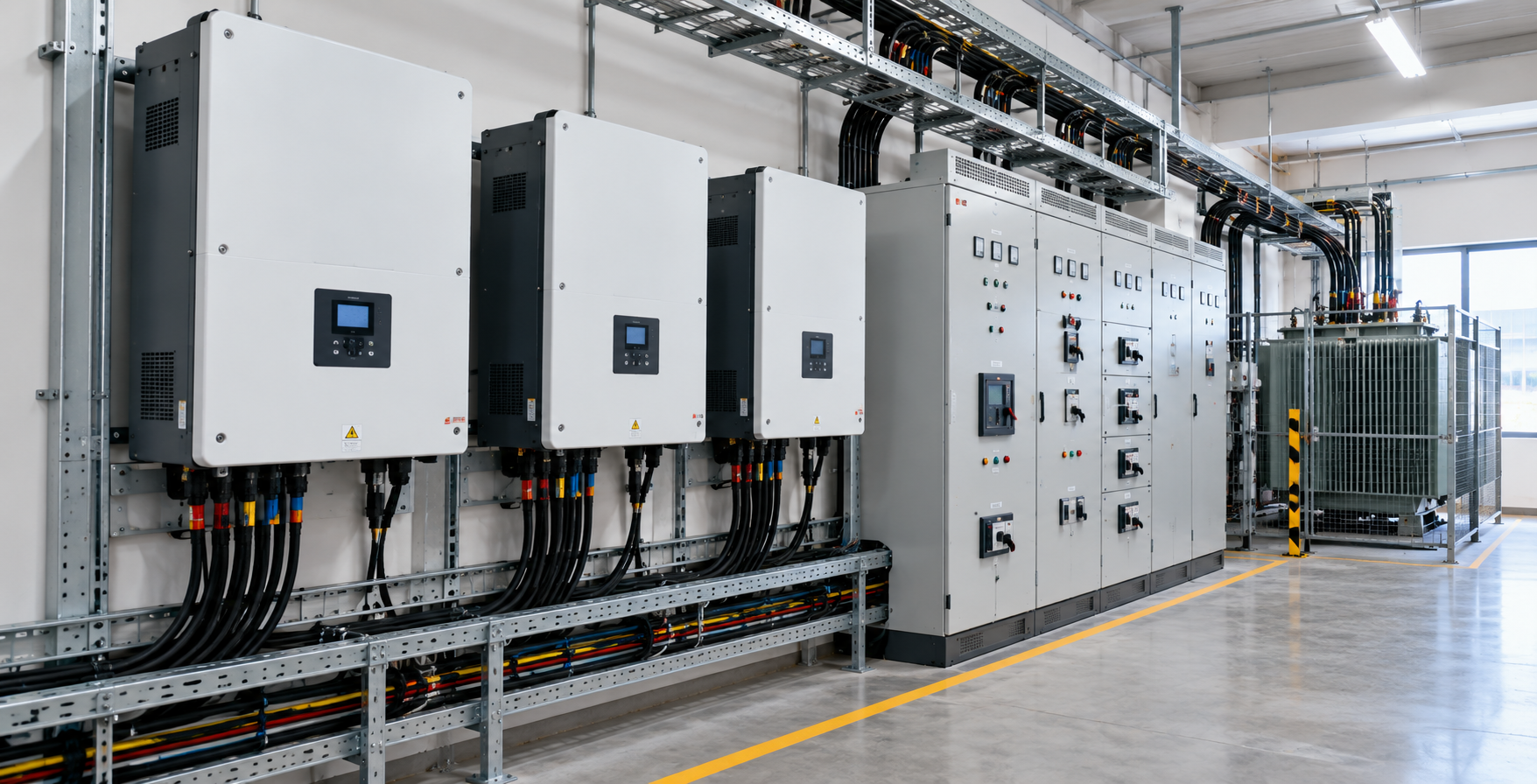
A top solar company in Gandhidham should be able to walk through exactly how they calculate system sizing against your actual load data, how they account for Kutch's heat in their design choices, and how their electrical architecture minimizes losses across a larger industrial site where cable runs tend to be longer than a typical residential job.
Post-Installation Accountability
Industrial systems represent significant capital investment, which makes post-installation support considerably more important than it might be for a smaller residential system. Confirm who handles maintenance going forward, what the response time commitment looks like for a fault affecting production-critical power, and whether the installer maintains local service capacity or routes support through a distant team unfamiliar with your specific installation.
What a Genuine Solar EPC Company Actually Delivers
The phrase gets used loosely, but a genuine best solar EPC company handles engineering, procurement, and construction as one coordinated process rather than three disconnected contracts handed to different vendors. This matters more for industrial projects than almost any other category, because the handoffs between design, sourcing, and physical construction are exactly where costly mistakes creep in on a larger, more complex site.
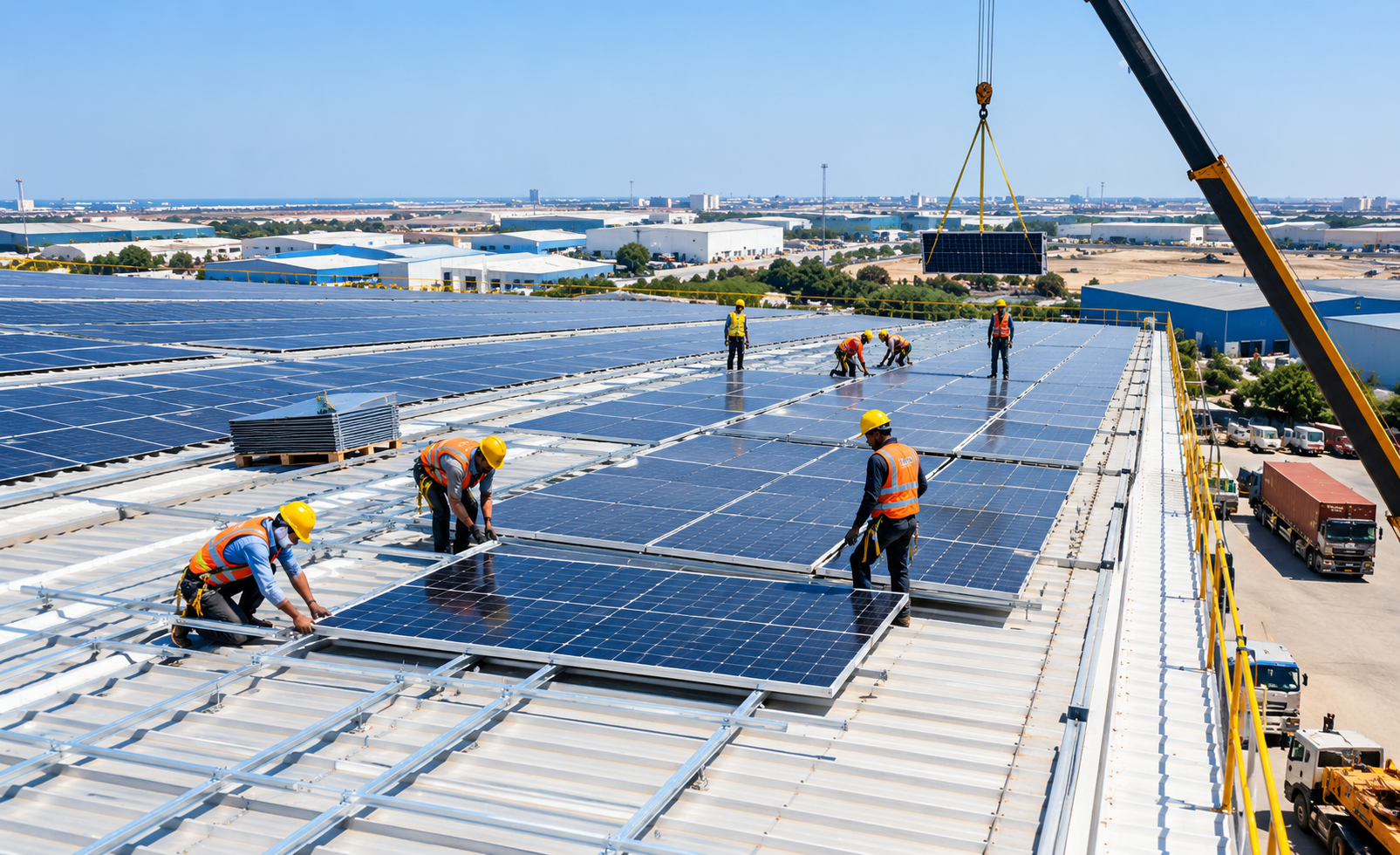
When the same organization designs the system, sources the components, and executes construction, design decisions carry through consistently. A cable routing choice made during design reflects the actual construction sequencing rather than getting reworked on-site because the construction team wasn't involved in the original planning. This coordination becomes especially valuable for a warehouse or factory that can't afford extended downtime during installation, since a well-sequenced single-vendor process minimizes disruption to ongoing operations far better than a fragmented one typically does.
Residential and Rooftop Solar Still Matter in a City Like This
While the industrial base defines much of Gandhidham's economy, the city's residential neighborhoods represent a growing and increasingly informed solar market of their own. Residential solar in Gandhidham typically starts with a straightforward site assessment looking at roof orientation, shading, and household consumption, with most homeowners finding that a properly sized system paired with available subsidy support brings their effective monthly cost close to what they were already spending on grid electricity, often lower over time.
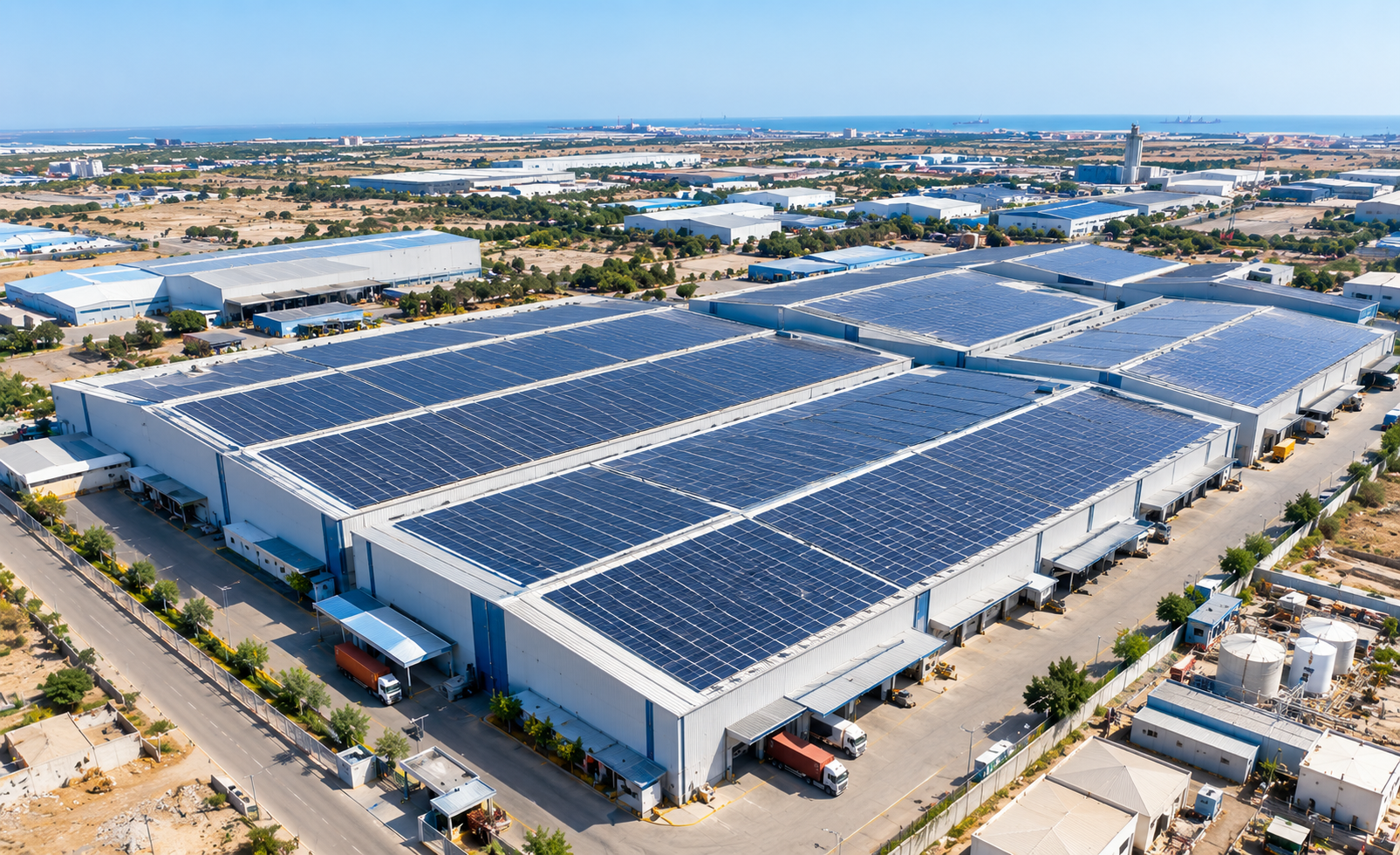
Closely related is the broader category of rooftop solar in Gandhidham, which spans everything from a modest residential installation to a sprawling commercial rooftop across a warehouse roof. The underlying engineering principles carry across both categories: proper structural assessment, heat-appropriate component selection, and electrical design suited to the specific roof geometry involved. What differs is scale and complexity, not the fundamental discipline required to get it right.
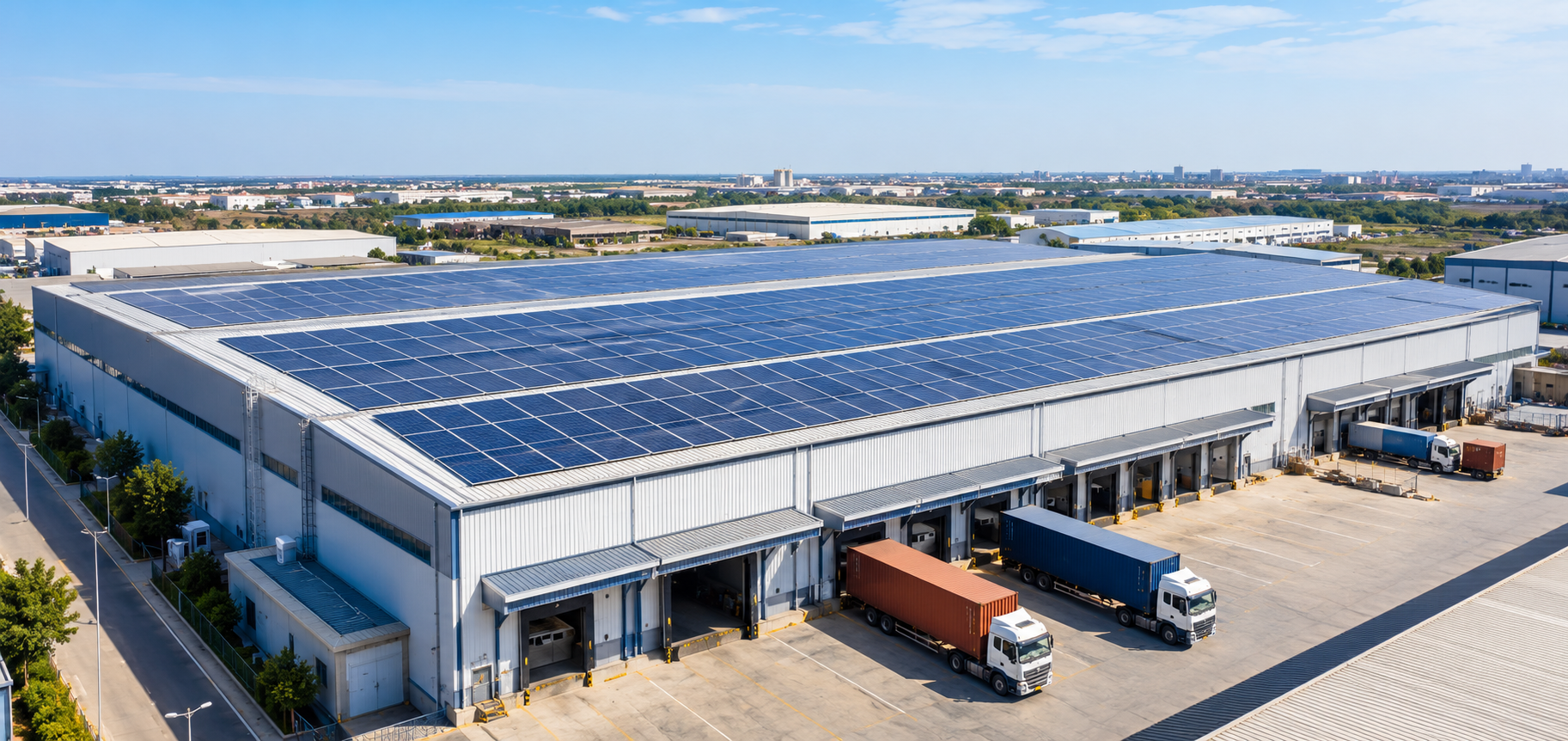
For businesses specifically weighing rooftop space against ground-mounted alternatives, rooftop solar offers the advantage of using existing structure rather than requiring additional land acquisition or site preparation, which is often the more practical path for a warehouse or factory already operating on a built-up industrial plot.
Industrial Solar: A Distinct Category With Its Own Requirements
Industrial solar in Gandhidham deserves its own separate consideration from standard commercial installations, since manufacturing facilities often have continuous or near-continuous power demands that differ meaningfully from a retail or office building's consumption pattern. A facility running production equipment around the clock benefits differently from solar than one with a straightforward daytime-only operating schedule, and system design needs to reflect that distinction clearly.
Larger industrial operations also need to think through whether a rooftop installation alone meets their capacity needs, or whether a dedicated ground-mounted captive power plant on adjacent land makes more sense given the facility's total load. This decision depends heavily on available space, the facility's growth trajectory, and how the capital investment compares against the facility's actual long-term energy cost trajectory.
Grid curtailment and compliance tracking also become more relevant at this scale. An industrial installation feeding significant capacity into the grid, or operating under a specific power purchase arrangement, needs ongoing monitoring and documentation to ensure revenue isn't quietly lost to unaddressed curtailment instructions or compliance gaps that a smaller system would never encounter.
What Proper Solar Installation Actually Involves for a Commercial Site
Understanding the sequence behind solar installation in Gandhidham for a commercial or industrial property helps set realistic expectations before signing a contract.
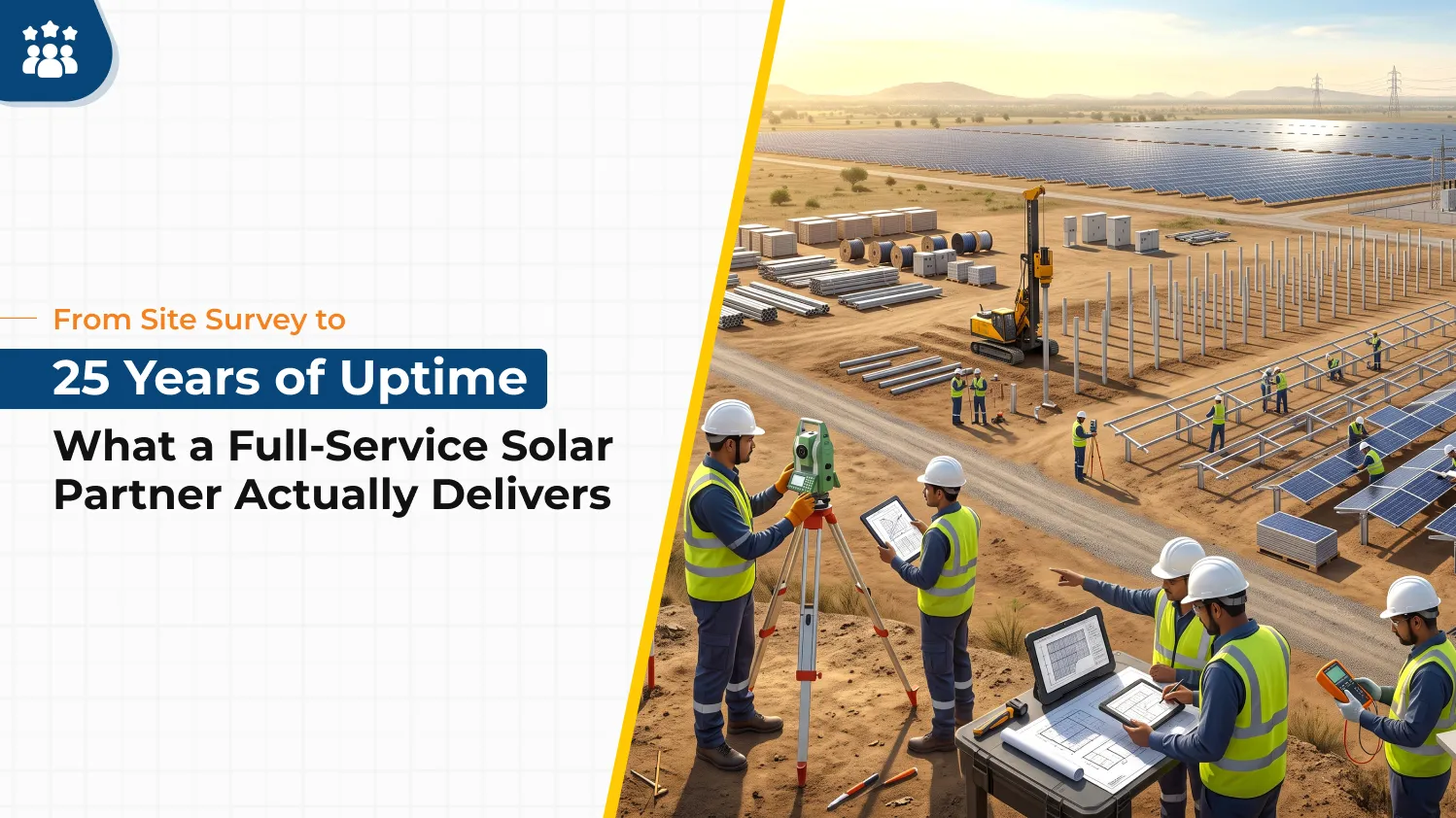
The process typically begins with a detailed site assessment and load analysis, examining not just roof condition but actual facility consumption patterns across different operating periods. From there, engineering and design translate that assessment into a specific system layout, component selection, and electrical architecture suited to the site. Procurement follows, sourcing panels, inverters, and balance-of-system components evaluated against both performance and durability standards appropriate for Kutch's climate.
Physical construction for a commercial or industrial site typically takes considerably longer than a residential job, given the larger scope and the need to coordinate installation around the facility's ongoing operations without disrupting production or logistics schedules. Testing and commissioning follow construction, confirming the system performs as designed before it's cleared for full operation and, where applicable, grid interconnection.
The Panel and Component Question
Every quote references solar panels in Gandhidham sourcing differently, and the components specified in a proposal matter considerably more than most buyers initially realize. Panel quality, inverter manufacturer reliability, and mounting hardware suited to local heat and dust conditions all directly affect how much a system actually generates over its operating life, not just at commissioning but in year ten and year twenty.
For an industrial buyer, this isn't an abstract concern. A panel that degrades faster than its warranted curve, or an inverter from a manufacturer with limited local service support, translates directly into lost generation and extended downtime exactly when a production-critical facility can least afford it. Asking a prospective installer to specify exact component manufacturers and models, rather than accepting a general assurance of "quality equipment," is a reasonable and necessary step before signing anything.
Choosing the Best Solar Service in Gandhidham for Ongoing Operations
Installation is only the beginning of a solar system's relationship with its owner. The best solar service in Gandhidham available isn't necessarily the company with the most aggressive installation pricing, it's the one whose ongoing maintenance and monitoring program actually protects the investment over its full 25-year life.
For a commercial or industrial client, this means asking specific questions about monitoring granularity, whether the provider can detect an underperforming string or section of a large rooftop array before it becomes a significant cumulative loss, and what response time commitment exists for a fault affecting a production-critical facility. A provider offering only vague assurances of "regular maintenance" without specifics on monitoring technology, response protocols, or documented fault resolution history is a weaker long-term partner than one who can speak concretely to each of these.
Red Flags Worth Watching For
A few consistent warning signs tend to separate problematic providers from reliable ones, regardless of how polished their initial sales pitch sounds.
Pricing significantly below every competing quote without a clear explanation of what's being cut to reach that number deserves scrutiny rather than excitement.
Reluctance to provide verifiable references from comparable commercial or industrial projects is another clear signal. Vague answers about warranty coverage, maintenance response times, or component specifications when asked directly, rather than specific, confident answers, usually indicate a provider more focused on closing the sale than delivering a system that will actually perform for the next 25 years.
Questions Every Factory or Warehouse Owner Should Ask
Before finalizing a decision, running through a consistent set of questions across every provider being considered makes the real differences between them far more visible than comparing headline pricing alone.
How many comparable industrial or commercial installations has this provider completed in Gandhidham or the broader Kutch region?
What specific components are being specified, and what's their track record for reliability in this climate?
How is the system being sized, against actual hourly load data or a rough annual estimate?
What does the maintenance and monitoring program actually include, and what's the documented response time for a fault?
Who handles warranty claims, and does the provider have a track record of successfully supporting clients through that process?
Conclusion
Commercial and industrial solar decisions in Gandhidham carry higher stakes than a typical residential installation, both in capital invested and in the operational consequences of getting the sizing, engineering, or component selection wrong. Factories and warehouses evaluating solar need a provider who treats their facility's specific load profile, structural requirements, and operational continuity as the starting point for design, not an afterthought handled after a standard template is already decided. Asking the right questions upfront, and verifying real track record rather than accepting a polished pitch, is what separates a solar investment that performs reliably for 25 years from one that quietly underdelivers against what was promised.
White Desert Power Projects has delivered commercial and industrial solar installations across Kutch's industrial corridor, including facilities in and around Gandhidham, with engineering and construction built specifically around the demands of factory and warehouse operations rather than a generic residential template scaled up.
If you're a factory or warehouse owner in Gandhidham evaluating solar, talk to White Desert Power Projects about a site assessment and proposal built around your facility's actual load profile and operational requirements.